
When a new government contractor calls our office, one of the first things they ask is what should be on the checklist. What I’ve come to notice over decades of working with federal contractors is that a checklist rarely tells the whole story, because the ones who struggle during DCAA audits haven’t missed an item so much as underestimated the weight of one that was already there.
1. Compliance Rarely Starts Where Contractors Think It Does
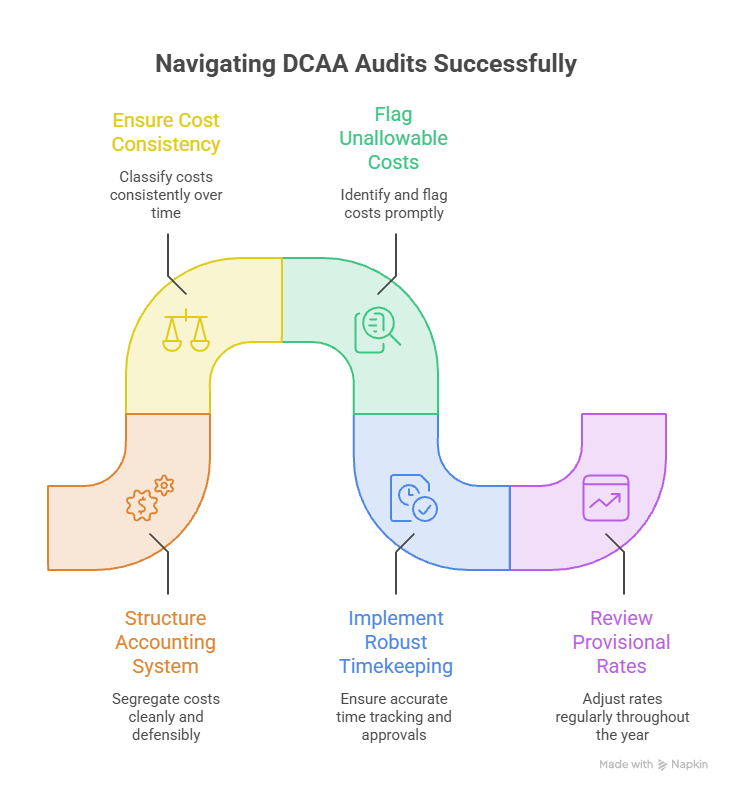
Most contractors treat DCAA compliance as a software question, but the choice of platform matters far less than how the accounting system is structured beneath it. I’ve watched contractors invest heavily in well-known tools only to run into audit friction because the underlying system couldn’t segregate direct from indirect costs cleanly or accumulate costs by contract in a defensible way.
2. The Direct-vs-Indirect Line Is Never As Obvious As It Looks
Cost classification sounds like a solved problem until it isn’t. The difficulty rarely comes from misunderstanding the definitions but from consistency over time, because treating a cost as direct on one contract and indirect on another without a documented reason is exactly the pattern the DCAA notices quickly.
3. Unallowable Costs Almost Never Get Caught the First Time
Every contractor can describe what unallowable costs are, so the problem is rarely definitional. It lives in timing, because these costs rarely get caught during the initial transaction and tend to surface only when someone reviews the general ledger and realizes an expense should have been flagged twelve months earlier.
4. Timekeeping Carries More Audit Weight Than Anything Else
If I had to name the single area that shapes DCAA audit outcomes more than any other, I would name timekeeping without much hesitation. Labor sits at the center of nearly everything the DCAA reviews, and the gap is usually not the timesheet itself but everything around it, from approvals to supervisor verification of what actually happened.
5. Provisional Rates Quietly Drift Between Audits
Provisional billing rates get set once at the beginning of the fiscal year and rarely revisited until year-end, but actual indirect costs move throughout the year as overhead structures change. I’ve watched contractors face large true-up adjustments not because the math was wrong but because the review rhythm was.
6. Incurred Cost Submissions Are Won or Lost Months in Advance
FAR 52.216-7 gives contractors six months after fiscal year-end to submit an incurred cost proposal, and the contractors who treat that window as their preparation period are almost always the ones who struggle most. The substantive work is everything that happens in the twelve months leading up to it.
What These Six Areas Have Taught Me
The gap I see is rarely a knowledge gap so much as underestimation. DCAA compliance isn’t really a checklist at all, but a habit of attention, because audits generally pass or fail long before the audit letter arrives, and by the time the DCAA is asking questions, the answers are already written into the records.